
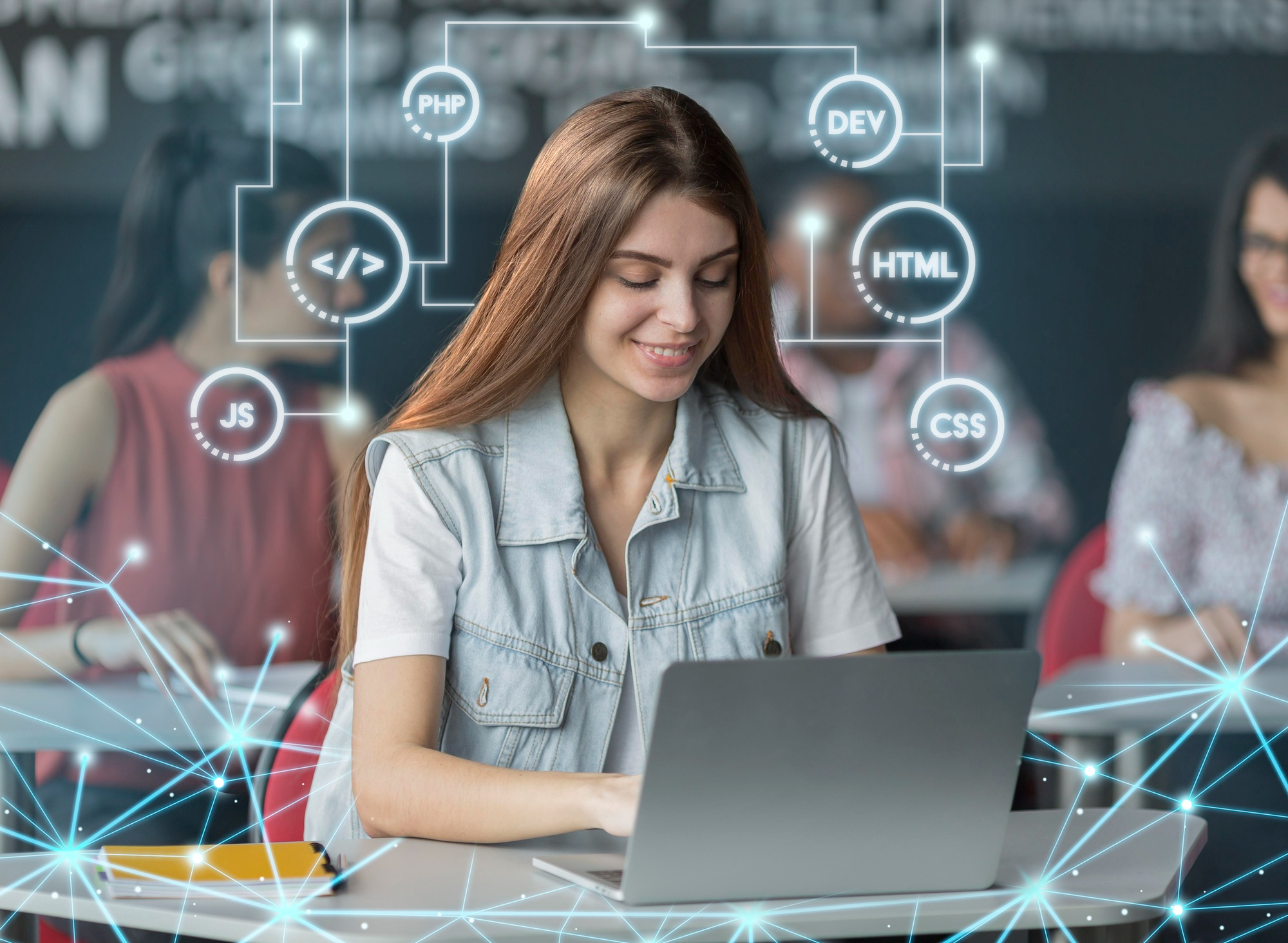
Learning feels different when every step is tailored to how your mind works. Some grasp patterns quickly; others need repetition. Some respond better to visuals, others to problem-solving. When instruction adapts to these differences, progress accelerates. This is the core of hyper-personalized skill development, a model that treats learning as a personal system, not a fixed path.
AI brings the mechanics to support it. It analyzes behavior across time, identifies gaps in understanding, and reshapes content to fit the learner’s exact stage. Rather than repeating lessons or guessing next steps, the system responds with clarity. Each decision is based on data, not assumptions. Let’s be clear. We’re talking about using AI to establish a learning structure, not stifle learning itself, such as ascribing creativity and critical thinking to the technology for which AI often receives criticism in academia.
The Challenges with Traditional Learning Models
Standardized education has limits that become more obvious the further a learner progresses. Once someone moves past the basics, fixed syllabi and batch-paced instruction start holding them back. Content is delivered in bulk, without regard for how quickly someone could advance or where they may need to slow down.
These systems treat every learner the same. The pace is set, the sequence is locked, and feedback arrives too late to make a difference. This works for introductory material, but it breaks down when precision and flexibility matter most. Skills like coding, design, or advanced language use require constant adjustment.
What learners need is a system that recognizes individual progress. They need instruction that recalibrates with each step. That kind of responsiveness is exactly what traditional methods fail to deliver.
One study revealed that post-assessment scores improved from 68.4 to 82.7 because of using AI tools that deliver personalized learning experiences. Engagement also increased, solidifying the role of modern technology in improving student outcomes.
How AI Enables Fine-Grained Learner Profiling
AI doesn’t rely on assumptions or broad learner categories. It builds a detailed profile from each interaction. As the learner progresses, the system collects and analyzes data on strengths, weaknesses, pace, and preferred formats—whether visual, verbal, or kinesthetic. Over time, the result is a highly individualized map of how someone learns best.
This level of profiling is especially valuable in skill-intensive fields like programming. A learner struggling with recursive logic might breeze through syntax. AI sees that distinction and adjusts accordingly. It moves past surface-level performance to uncover deeper patterns in understanding and application.
Language learning shows this in practice. Users focused on fluency benefit from modern language apps, for instance, Langua’s advanced AI language tutor adjusts lessons based on vocabulary recall, pronunciation clarity, and interaction speed. These adaptive systems create a learning experience shaped by real-time performance rather than generic rules, making each session more targeted and effective.
Tailored Learning Paths for Specialized Domains
Once AI builds a detailed learner profile, it doesn’t stop there. It uses that insight to craft a unique path forward—one that shifts based on the learner’s goals, pace, and performance. In specialized fields like coding or creative arts, this makes a measurable difference. Learners are no longer moving through filler content. They engage only with what builds their capabilities.
In coding, for example, AI can map progress through concepts like data structures or asynchronous logic based on how well each prior concept was understood. Creative learners may receive prompts that align with their style or gaps in technique, refining skill through focused repetition rather than random practice.
Each decision is data-driven. The learning path grows with the learner, incorporating complexity only when it’s needed. This saves time, avoids frustration, and supports consistent forward motion without the rigidity of conventional instruction.
Real-Time Feedback and Dynamic Adjustment
Feedback is most effective when it’s immediate and specific. That’s where AI systems outperform traditional models. Instead of waiting for test results or instructor reviews, learners get real-time input while they work. Every attempt, correction, or hesitation becomes a learning moment that the system tracks and responds to.
A programmer making repeated syntax errors sees them flagged instantly, with suggestions tailored to their coding style and previous mistakes. A visual artist exploring digital techniques receives prompts that align with their preferred tools and brush behaviors. In both cases, the learning cycle tightens. There’s no long delay between action and correction.
This immediacy builds momentum. Learners stay engaged because they’re always working with relevant, timely support. Each adjustment builds on the last. The result is a continuous loop of input and refinement that helps sharpen complex skills faster than static instruction ever could.
Scalability Without Losing Personalization
One of the strongest advantages of AI in learning is its ability to scale without flattening the experience. Traditional tutoring offers high personalization, but only in one-to-one settings. It’s expensive, time-bound, and limited by human availability. AI breaks that constraint by delivering individualized attention at scale.
Each learner still gets a custom path. The system doesn’t recycle lessons across users. Instead, it pulls from a deep content library, adjusts based on performance, and delivers only what matches the learner’s current needs. This works whether there are ten users or ten thousand.
The quality of support stays consistent. Learners receive adaptive content, real-time feedback, and data-informed pacing regardless of class size or schedule. This makes high-level, personalized skill development accessible to far more people, without losing the individual focus that drives real progress.
Challenges and Considerations
AI-driven learning systems offer speed, precision, and personalization—but they also come with limitations that must be addressed if these tools are to support deep, equitable growth. Some issues are technical, others ethical, and a few require careful oversight during design and implementation. These challenges don’t cancel out the benefits, but ignoring them could compromise learning outcomes and trust in the system.
- Data Privacy Risks: AI tools rely on large volumes of personal data, which can raise serious concerns about how that information is stored, used, or shared.
- Algorithmic Bias: If the system is trained on narrow or incomplete data sets, it may deliver skewed feedback or reinforce educational inequalities.
- Loss of Critical Thinking: Over-reliance on AI suggestions can reduce a learner’s ability to think independently or question flawed outputs.
- Lack of Transparency: Learners and educators may not fully understand how decisions are made by the system, making it harder to evaluate accuracy or fairness.
- Inconsistent Access: Advanced AI tools often require strong digital infrastructure, which can widen existing gaps for students with limited connectivity or outdated devices.
Wrapping Up
The untapped potential of AI lies in its ability to treat learning as a moving target, shaped by each learner’s intent, rhythm, and growth. This is no longer a futuristic idea. It’s an active shift happening now. When education prioritizes adaptability over uniformity, skill development becomes a process of precision. The tools exist. The next move belongs to those ready to use AI responsibly, with purpose and clarity.