By Collin Bonnell
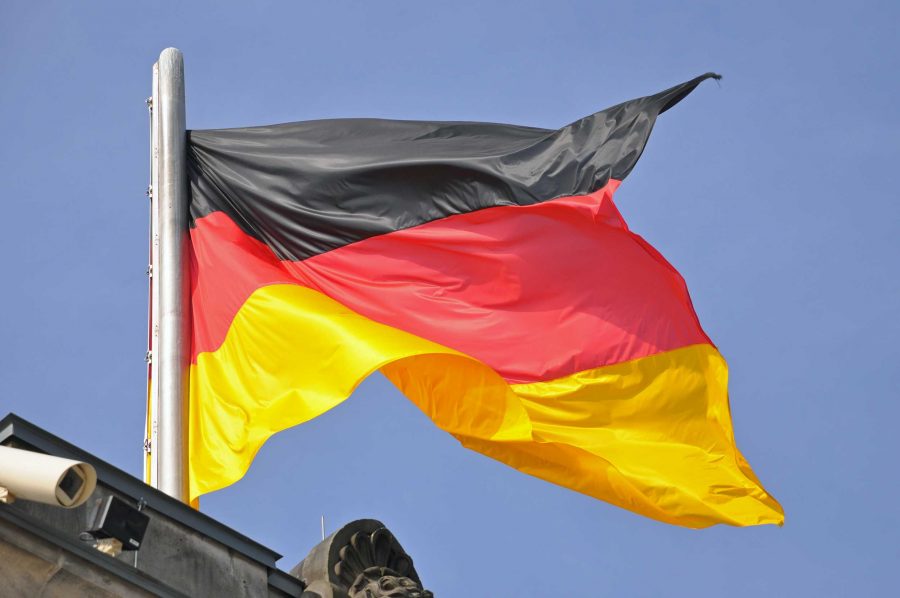
The Alternative for Germany party saw a major increase in political support despite Angela Merkel winning German Election (Courtesy of Flickr).
On Sep. 24, Germany held a parliamentary election. Although Angela Merkel secured a fourth term as Chancellor, it was the rise of the far-right Alternative for Germany, or AfD, that dominated global headlines. The surprising success of AfD, which is unique among German political parties in its open nationalism and Islamophobia, was largely driven by the unpopularity of Merkel’s immigration policies and widespread frustration with mainstream politics. According to a recent report by NPR, the voters behind the party’s sudden rise span the political spectrum, but all share a deep sense of dissatisfaction with the country’s current political system.
The party’s rise has also brought the stubborn and petty disputes between Germany’s two main parties, the SDP and CDU, to a head, despite the fact that both parties had their worst showings since the 1940s and make up the current governing “Grand Coalition.” A recent article in The Guardian reports that the leaders of both parties have expressed an unwillingness to govern, largely out of an effort to please their increasingly polarized bases. This has forced Angela Merkel to seek a risky “Jamaica Coalition” with the smaller Green and Free democratic parties. Yet this coalition, which seems the most probable outcome, could prove to be extremely unstable due to the animosity between the Greens and FDP.
The two parties have long competed to join SDP and CDU as one of Germany’s main parties, and have deep ideological conflicts between their environmentalist and libertarian worldviews. In addition to this, the Greens are unlikely to join a coalition with the CDU unless Merkel gives them significant concessions on environmental policy. A four-party coalition, in which the SPD, CPU, FDP and Greens would unite in opposition to the AfD, could help contain the growth of the party, but seems increasingly unlikely due to the political maneuvering necessary. The strategy could also backfire and result in gridlock between rival factions within the government.
These petty conflicts have allowed representatives from AfD to press ahead with a lawsuit against Merkel and take advantage of the chaos engulfing the German political system to arouse more popular discontent.
The rise of the AfD is just another in a long wave of populist political insurrections that have swept the European continent in the past few years. This past June, Theresa May found herself in a similar position as did Merkel after making a risky political gamble by calling a snap election in order to give her a monopoly on Brexit negotiations. The vote backfired immensely, with the conservatives losing several seats to a revived Labour Party under Jeremy Corbyn, and losing their slim majority in the House of Commons. In the immediate aftermath of the election, it appeared as if May would salvage the political stability of Britain by forming a coalition with the liberals, who agree with the conservatives on most issues and would have given May a larger majority. Yet May made what she deemed the politically expedient decision and invited the far-right Democratic Unionist Party into her government. The DUP, which played kingmaker in return for £1 billion in infrastructure spending and a voice on determining the government’s position on social issues, has had a controversial history.
Founded during the height of the troubles in Northern Ireland, the DUP has long prided itself as a “defender” of British and protestant values against the threat of Irish nationalism. In recent years the party has also become prominent for its opposition to legalizing gay marriage in the country. While May’s embrace of the DUP won her narrow control of Parliament, it drew ire from politicians across the political spectrum. John Major, a former prime minister and leader of the conservative party during the Northern Irish peace process, went on television to state that peace was not a given and that May’s action was a direct threat to the peace which has existed in Northern Ireland since the 1990s. Gerry Adams, the former leader of Sinn Fein, went even further and accused May of being in direct violation of the Good Friday Agreement. May made a conscious decision to embrace a party that poses an imminent threat to peace in Northern Ireland out of political expediency and a desire to maintain her own influence during a time of political upheaval.
While AfD didn’t secure enough seats to make it a viable choice for Merkel to form a coalition partner, it is easy to imagine a point in the near future when the CDU will be forced to choose between embracing the AfD as a junior partner or giving up its power. It is up to the political leaders and democratic parties of Europe to set aside their differences and unite in opposition to right-wing populism. This approach was recently used by the mainstream parties in France, who united in their support of Macron and saved France from electing Marine Le Pen. Machiavellian politics and power plays have no place in times of chaos, and this is a lesson that the leaders of Europe should take to heart.
Collin Bonnell, FCRH ’21, is a history and political science major from Hingham, Massachusetts.